Why Postpartum is the best time to read Vogue

Hello, darkness my old friend.

It’s been a month since I gave birth to my second son and like riding a bicycle in the middle of the night, I’ve reaccustomed myself to the all-hour wakeups, bleary-eyed feeds and the startling sound of a newborn’s cries cutting through my sleep. This time it’s slightly different though, as our three year old has a tendency to bound into our room, curious about the commotion and wondering if he can ‘help.’ Cue an early morning sitcom - which usually ends with all four of us sardined next to each other trying to get back to sleep.

I can’t tell whether this change to our family is more challenging because it’s a) in a relatively new setup (the move/a different country etc), b) due to the fact that we already have a child or c) because we are both older and more tired in general. It’s likely all of these factors and more, but I’m surprised at how difficult some of the the postpartum period has been for me.

On the other hand, there are mitigating factors, which make it much easier than the first time. For one thing, we know the basics of babyhood and that takes away a lot of the anxiety, which was rife with our first. Baby’s crying? We run through the checklist: is he hungry? wet? ill? tired? gassy? cold? lonely? If it’s none of the above, default to the catch-all colic. I can then plug in an airpod and ride it out.

The newborn time (which in my case, is nearly over), can be a spellbound period. From a fairly predictable pre-birth routine, where you expect to be awake in the day and asleep at night, you are thrown into the possibility of being up at any hour at the service of a tiny, demanding overlord. Welcome to Tardis Time.

Many things come together to make the first month of life an almost hallucinogenic experience. For the mother, there is the hormonal tsunami of giving birth - goodbye progesterone, hello prolactin! But it’s not just the internal chemical restructure the mother has to deal with, more obvious is the physical recovery. Abdominal organs shift, breasts leak and all of this is punctuated with the pain of having recently grown and dispelled a 3kg human from your body. For anyone who’s had surgery (and been discharged on mere paracetamol and ibuprofen), pain can be a disorientating, humbling reality for many weeks.

This is the setting for midnight feeds and troubleshooting a screaming newborn in the dark. Combined with vintage style light bulbs the whole experience has the air of a fever dream: Valencia Instagram filtered and vertiginous in appearance.

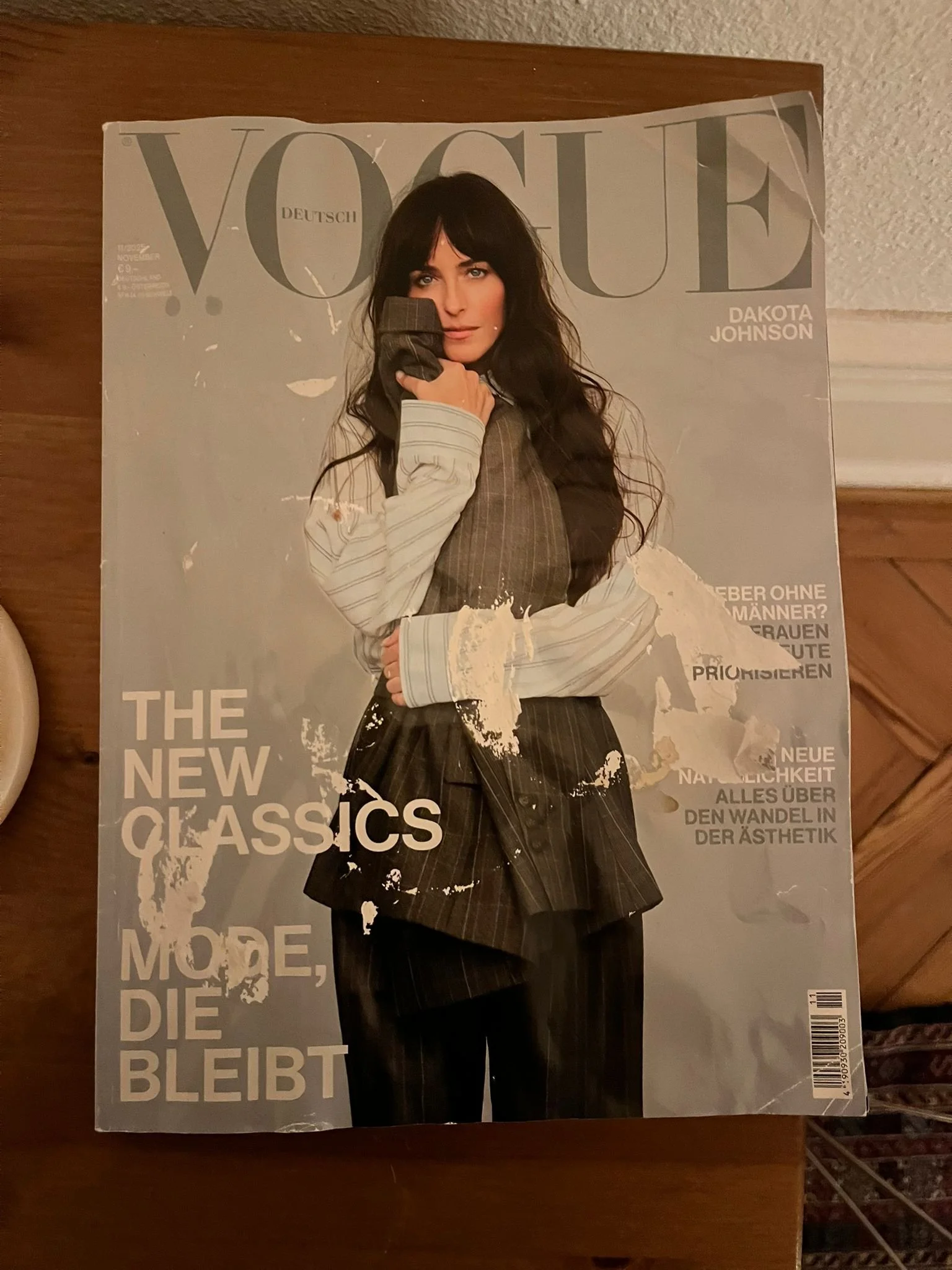
Somehow in the middle of this psychedelic trip, I found a November issue of German Vogue on my bedstand. I don’t usually buy fashion magazines as I remember the sage advice of Baz Luhrman’s ‘Everyone’s Free to Wear Sunscreen:’

‘Don’t buy beauty magazines, they will only make you feel fat.’

But postpartum I found Vogue oddly comforting. Everytime the baby woke me up at an unmentionable hour, Dakota Johnson’s serene face would be looking back at me, projecting a calm I did not feel. The glossy cover reflected the lamplight and I would pick up the magazine and feel it’s sleek form counterbalancing the warm heft of the baby in the other. Together the three of us: Vogue, baby and me, would spend the next half hour in calm equilibrium: baby feeding, me reading and Vogue in commune with us both.

One of my usual objections to beauty magazines is the dominance of adverts and paucity of written articles, however, in the postpartum period, this is exactly what I needed. My brain could not handle clever reports and ‘great writing.’ Amongst the pain and sleep deprivation all I could digest were short puff pieces about Lily Allen’s latest album.

And say what you like about Vogue, but it is beautiful. The adverts astonish with their extravagance: double-spread pictures feature luxury items and gorgeous people in the most sumptuous settings. Usually this unachievability would irritate me, but at a point when I had never felt so far away from the feminine ideal, the pictures of haute couture held such appeal. Suddenly the pressure was off. For me, this was the season of the milkstained nightshirt. For once I could look at the photos of evening gowns and just look, not look and feel the need to embody it too.

A month after giving birth I feel the spell beginning to break. My husband is back at work and the baby has put on weight. The overall trajectory is one of progress. However, I do wish some things I could maintain, one thing about them being the ability to admire a beauty magazine without feeling the compulsion to aim for the unrealistic beauty standard it projects. Needless to say, I haven’t bought the December edition of Vogue… yet.
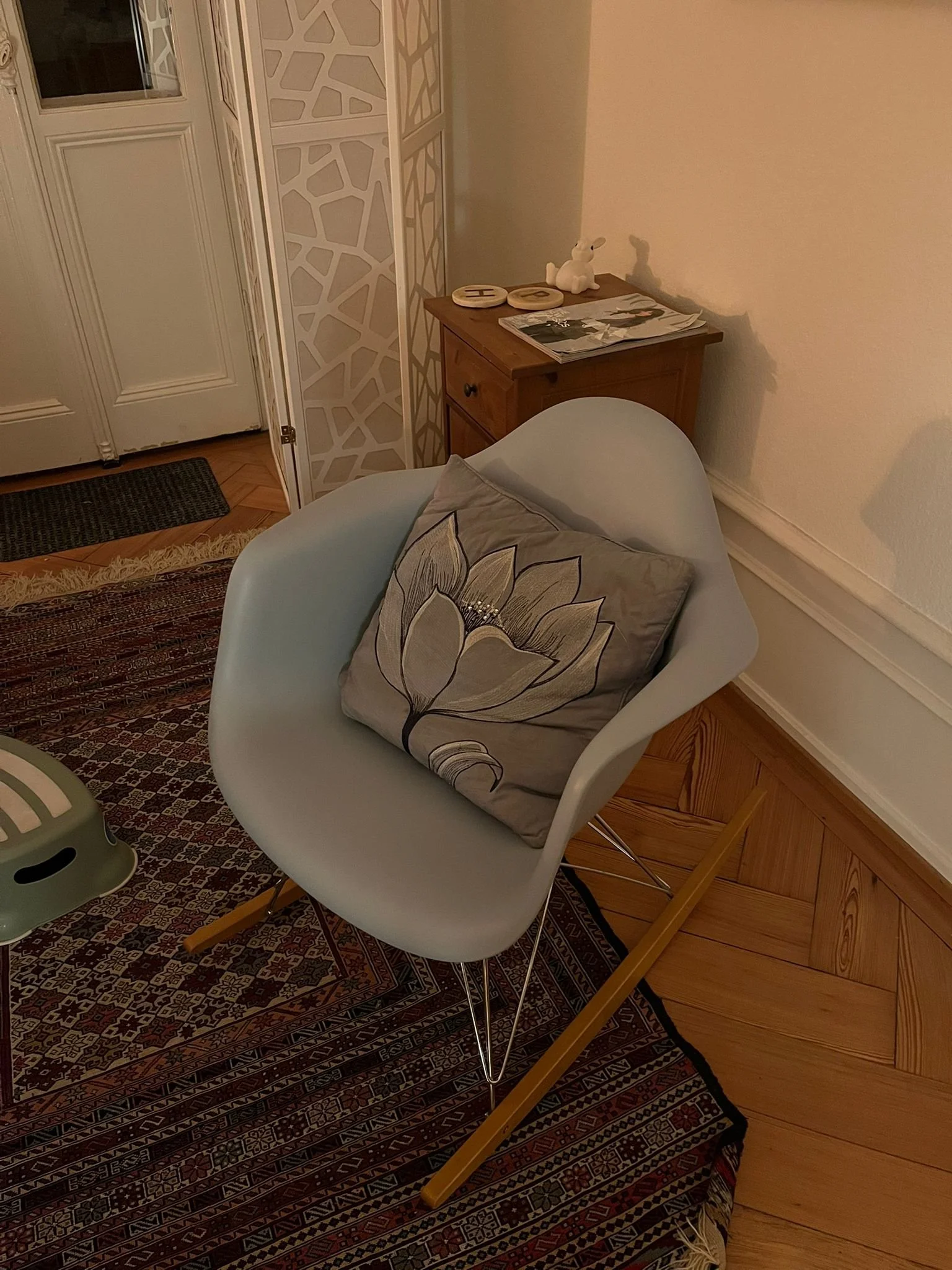
The nursing station, where I have spent many november hours
Climbing Kilimanjaro

The last few weeks have been exceptional. By any measure, we’ve accomplished a lot since coming to Switzerland, however, in the way of the everyday there is is little active recognition of this. Unlike climbing Mount Kilimanjaro, there is little to signify you’ve crested a summit in the adminstration of moving country. No one thinks to take a photo of you as you sit there puffing gently, having successfully navigated a document full of words like ‘Anerkennungsgesuch Weiterbildungstitel’ and ‘Originalbeglaubigungen.’ There is little showmanship in this version of the hero’s journey.

Unless you remember to take stock of the situation you could fall into the trap of just moving from one problem to the next, feeling more worn at each step. So in celebration of all that has been accomplished in the two months since we moved, here is a summary of some of the things we have had to face and overcome:

  1. Registering with Swiss Cantonal authorities

    As mentioned previously, this unlocked more opportunities and privileges, which required, you guessed it, more administration.

  2. Setting up health insurance

    I cannot overstate how glad I am to be married to a Swiss native. The health system and various insurance options are very different to my bread-and butter-NHS and the terminology makes my eyes water. My husband set this all up and I am so grateful.

  3. Antenatal care in a German-speaking hospital

    The third trimester is when things start to accelerate and dealing with successive appointments has been no small feat. In addition, organising a community midwife, joining a pregnancy yoga class and the logistics for the baby’s arrival has all been done in good time.

  4. Ongoing administration from the UK

    Despite moving we couldn’t just tie up all loose ends as we still have commitments in the UK. This is unlikely to change for the forseeable future. Playing troubleshooting whack-a-mole across two countries is challenging.

  5. Organising childcare

    Although Basel has better wait-lists for nurseries compared to the UK, it can take time to find an establishment you’re happy with. Whilst we organised this, I was looking after our rambunctious three-year-old full-time, which was increasingly difficult as the third trimester wore on. But rather than accepting the first nursery we saw, we held out and pushed for the Goldilocks option. We now have a nursery we’re hugely happy with, which is also just 5 minutes from our house.

This is a potted list of some of the more major issues we’ve dealt with. Luckily, my husband and I have an online Kanban board, so have a record of what is still left ‘to do,’ ‘in progress’ and ‘done.’ The ‘done’ list is our visual reminder of how much we’ve achieved and serves as our snow-tipped Kilimanjaro photo. In between the Cantonal-stamped envelopes and the intimidating health insurance bills in our postbox, it’s great to remind ourselves of how much we’ve accomplished.

I now find myself in the ‘Zwischenzeit’ (in-between time). With my son in nursery, I have two weeks before the next chapter begins with the new baby. This is an undoubtedly precious time. These few days are my own, to fill the way I see best. So why am I staring into space, paralysed? Perhaps it’s the sword of Damocles prospect of going into labour at any moment, or the comedown after a busy few months, but I cannot seem to motivate myself to do much. The beauty of Basel is right outside my window, but instead I stay at home, not even sleeping. The hours slip by and then it’s nursery pick-up time.

But maybe that’s what needs to happen right now?

I look at the Kanban list and feel astonished at what we’ve accomplished in these short weeks. In another fortnight, life will transform again with the wholesale devotion of looking after a newborn. A period of stillness in the Zwischenzeit is probably exactly what is needed. So, I will try not to feel guilty for the lack of milk in the fridge even though I could easily nip out to get some. Sometimes getting stuff done is not the priority. Let Kilimanjaro wait for another day.

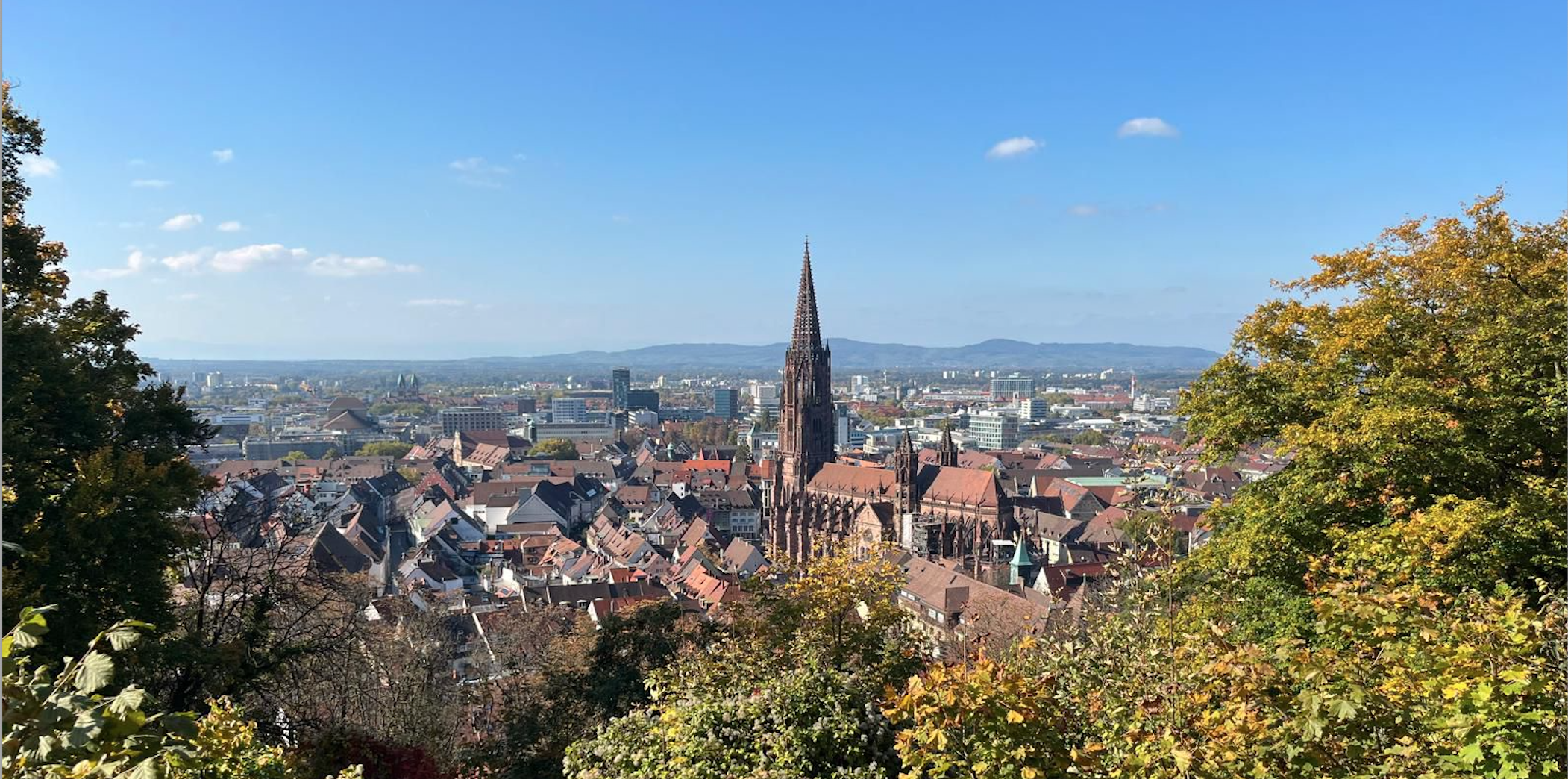
The view from schlossberg, freiburg im breisgau, the closest to kilimanjaro i’m likely to get in this pregnancy

Sweetening the Deal

I’m not a big fan of the third trimester. It doesn’t compare to the miserable nausea and vomiting of the first, that’s true, but these last few months also have their challenges. What’s that you say? You don’t need to hear a list of all the pregnancy-induced issues I’m having? That’s ok, let me list them to you anyway:

  1. Lower limb and hip aches and pains of variable intensity, location and duration. This may be a result of hormonal shifts and production of the ‘relaxin’ hormone (which is anything but), leaving you supposedly more limber for birth.

  2. Acid reflux in extremis. Where my guts used to be, a small human now resides. My stomach has nowhere else to go.

  3. Lingering coughs and colds. My immune system is subdued in an effort to not attack the genetically different baby. Same goes for genetically different bacteria. This cold has lasted for weeks.

  4. Pulled rib muscle as a result of ongoing cough. It only hurts when I breathe, which is all the damn time.

  5. Insomnia. Multifactorial - increasing size of abdomen means I haven’t been able to adopt my favoured sleep position (prone). Plus all of the above don’t help.

  6. Fatigue - as day follows night, or 6 follows 5, fatigue follows insomnia and pregnancy. QED.

I’ll stop there for fear of losing the few readers I have.

Despite all of the above, one has to find a little light in the darkness of early morning waking. And the one boon of pregnancy (other than the little bundle of screaming joy at the end of it) is that it serves as a brilliant excuse for all sorts (see above list). Had I not come to Switzerland at 29 weeks pregnant, I would never have been able to blame the amount of baked goods I have eaten on the physiological process of tripling the weight of the human inside me. Buttery bread and hazelnut spread? Baby needs fats to make its vernix caseosa! Hot chocolate, sublime as only the Swiss can make with their Alpine cream? I need a caffeine substitute to prevent fetal growth restriction in the third trimester!

And Switzerland has come through on the sweet front - bakeries are abundant and essential. There are three on my street alone and in the city centre you are never more than a few hundred metres away from one. And if you do find yourself in the unlikely situation that a bakery is nowhere to be found, the quality of ingredients is so high that even supermarket-bought baked goods taste great.

My closest bakery opens at 6am, which is not dissimilar from the Greenwich Gail’s (6.30am), which used to be my local. However, Gail’s was a half mile walk from my house, which made freshly baked bread an almost impossible prospect for breakfast on a weekday. Now mornings are of a different order with buttery zopf and artisanal loaves (which include NON-sourdough options!) on daily rotation.

So, for the moment I have parked the worries of pregnancy-related weight gain to the postpartum time. Sometimes, you need to reach for the nearest pleasure to hand and in Switzerland that is definitely the bakery.

Himmi’s Shoggiweggli Hitlist

Shoggiweggli is arguably Basel’s best creation. Forget Roger Federer and LSD, I will argue for this chocolate chunk-studded milk bun above all other Basel exports. Here are a few of my favourites:

Confiserie Bachmann

The original and the best. The shoggiweggli was invented by Anton Bachmann of Bachmann Confiserie fame. With the richest, most buttery dough in town, the original shoggiweggli is still the best.

Sutter Begg

Sutter Begg is a popular chain of bakeries in Basel (and contributes 2 out of 3 bakeries on my road). This shoggiweggli has a tougher dough than others but has good quality chocolate chips.

Supermarket shoggis

The cheapest option on the list is still very acceptable (at least the Coop one is!) With good buttery dough and plentiful chocolate chips, this is the best substitute if you can’t get to Bachmann.

The First Fortnight

It didn’t feel massively different. One minute our British Airways A320 was taxiing on the tarmac at Heathrow and then 80 minutes later I was in Basel. During that time I had supposedly emigrated.

Maybe it’s the fact that short-haul travel is so common and I have made such journeys many times before, sometimes for a mere weekend, that it didn’t feel extraordinary. I think of the famed migration tales of the past, for example, Colm Toibin’s Brooklyn and feel my own story somewhat lacking. At least I wasn’t flying Easyjet.

Perhaps the more impressive moving journey is that of our household contents, which had already been delivered to our new apartment by the time we arrived. In the space of four days our sheet-wrapped furniture and countless moving boxes had crossed the continent and made it to Basel before we did. Forget an hour and a half of airline trolley service, trans-European emigration from the perspective of a bubble-wrapped lounge chair is the story I want to hear.

And now I live here. Even a short walk in the area around our flat highlights how much our environment has changed. Basel city has a population of 118 000 (rounded up). The London Borough of Greenwich, where I lived previously, has a population of 289 000 (rounded down). And the difference is palpable. At the moment it’s hard to untangle the contribution of locality versus nationality between Basel and London. For example, the Swiss Sunday Sabbath (no commercial shops may open), immediately calms the pace in the city. So too do the wide European boulevards and the reduced number of arterial traffic roads.

Instantly, I feel a loosening of pressure simply in the day-to-day experience of navigating the city. This is that city break feeling, where the friction of the daily routine falls away. Whether it can stand up to a resumption of ‘normal life’ e.g. a commute and work commitments, remains to be seen. However, judging by the relative size of Basel and Switzerland in general, I believe this new lightening of the load is here to stay.

Daily administration, however, is a work in progress. There are many things to do but Swiss efficiency does help keep things on track. Unlike the nebulous system in the UK, nearly all administration hinges on registering at the Einwohneramt. Once you’ve notified the local authority of residency (proven by virtue of a rental contract) you can sign up for the rest of the essentials: health insurance, bank account, phone contract etc. Therefore, the Swiss keep an effective tally of who exactly is living where and all major administrative bodies are informed of valid changes in status and residency. It sounds simple but undoubtedly isn’t.

And yet, it’s the little things you need most. Health insurance (as long as you’re well) doesn’t feel as vital as it is, however, not having a working SIM and internet connection on the mobile, can leave you feel incredibly isolated and lost (literally, Google Maps has replaced a functioning hippocampus in my brain). And in the domestic sphere, the irritation of English plugs meaning you can’t make a cup of tea, or the lack of a shower curtain can quickly become a major impediment to a sense of wellbeing in a new setting. These things, minor though they seem are not to be underestimated and make a challenging situation that much harder.

However, there is much to sweeten the deal, not least the buttery Swiss pastries which I treat myself to on a daily basis. As I’ve learnt to appreciate with the various moves I’ve done throughout my life, not least the yearly rotations of medical training, relocation doesn’t happen all at once with everything being accomplished in a week or two. It is a slower process with the colours and depth ripening at different times like a Polaroid developing in front of your eyes. Regardless whether the boxes are unpacked or the systems fully in place, there will come a time, sooner or later, when I will look around at Basel and I will feel at home.

Before…

…AFTER - A semblance of order.

Live like you were moving

We’ve booked our tickets. That means it’s happening. We’re moving.

The first glimpse of the swiss alps from the starboard side of the plane - always a marvellous sight

I’ve always found travels, be they for holiday or relocation, have never seemed truly real until the tickets have been booked. Before that, there remains a cloud of uncertainty. Well, I could go but there’s nothing to say that I must. Once hard-earned cash is handed over (I’m too foolhardy to spend more for flex tickets), I am obligated: I’m going.

So, that leaves three weeks to wrap up life in London and do everything I’ve been putting off for the last six years, as well as pack and say my goodbyes. That’s on top of the baseline busy-ness of everyday life. It’s an interesting problem to have and not dissimilar to my job as a GP. When faced with limited resources, how do you manage a list of competing demands?

I’ve realised you have to prioritise.

As a doctor, that’s fairly straightforward: clinical urgency trumps everything, and then the rest can be sorted out in a more relaxed manner. But how do you prioritise pleasure? In these last few weeks I have the same constraints as a working day i.e. I have limited time, but how to decide when it’s a decision between a nostalgic trip to a bakery versus a last-chance musical in the West End? Where’s the urgency there?

I can’t say I’ve found the exact formula. My initial strategy was maximisation: cramming as many activities in one after the other. The result, however, left me exhausted and resentful of yet more ‘treats.’ Evidently, that was the wrong approach.

I have since used techniques borrowed from my day to day as a GP. I have made an extensive list of all that I would like to do and then selected the most pressing items using an Eisenhower chart. This 4x4 checkbox of (non)-urgent vs (un)important tasks allows me to see what matters to me. Combining this with a weekly planning matrix (for the next three weeks), I have an overview of what can realistically be achieved.

I realise that my current way of managing time is an art governed by multiple techniques. The ‘planning matrix’ is a fancy version of the revision timetable I lovingly constructed in multiple glitter gel colours for school exams. And the 4x4 matrix is a modified wish list of wants versus needs. As ever, there seems to be too much to fit the allocated space. My wants and wishes splurge out of the containing squares. I need to cull.

This is the perennial problem with modern life: there is more to do than can ever be done*.* Or so says the Lion King. I, like many of us, have a tendency to take for granted the finite nature of existence. Only in the face of a hard limit e.g. a deadline (movers coming in two weeks) or a diagnosis (baby coming in two months!), do I realise there are boundaries in my life. Then follows a mad cram to do all the things I have put off thinking there’d be time enough later.

Always later.

I wonder if that’s the reason I am happy to keep moving? I have always thought my vagabond spirit was fuelled by the prospect of a new start. Now I wonder if I actually crave the deadline itself, which gives me the impetus to do all the things I put off?

Either way, the end to my time in London is replete with pleasure, which offsets the usual stresses of relocation. In amongst the farewell parties and the poignant boxing up of items, there are spontaneous meetups to say goodbye and express gratitude. With not enough time for small talk, I have to say all the things I have always wanted to, but have never had the occasion to:

‘Thank you, this has meant so much to me, I love you.’

It is a bittersweet pleasure to formulate a truly finite list . There is something to be said for living like you were moving. The lasts are as treasured as the firsts.

Moving to Switzerland

I first really moved to London in 2019. Ostensibly a ‘London' girl’ having attended (don’t judge me) a school in Croydon, I actually grew up in Surrey. My childhood was so happily sheltered that I rarely went beyond my suburb, let alone into London proper. That’s why I consider 2019 the year I actually moved to London.

The subsequent six years in London were formative. During that time I worked as a doctor in the pandemic, finished a decade-long medical training program and became a GP, married my partner-now-husband, had one baby and am now expecting another. I feel I’ve made the most of things. But such a cram of life events, regardless of their worth and joy, can take their toll. Most people I talk to are feeling the effects of prolonged stress from the world lurching from disease to war to economic and political turmoil.

There are a variety of responses to such upheaval. As a family we tried a number of different approaches over this time but as I see it, there are only three options available:

  1. Do nothing

  2. Change the situation in situ

  3. Change the situation completely e.g. move

In these six years I have tried the first two options, first by finishing my GP training and working within the limitations of a struggling NHS. After qualification I have tried a number of different roles all whilst remaining in London: I’ve continued to work as a GP but also worked in public health, medical education and pursued med tech opportunities. This time has been challenging as I’ve had to integrate my new jobs with existing family commitments and budgets. To a large degree, I’ve been successful.

However, with baby number two on the way and the longer term ramifications of child-rearing looming large (schools, childcare for two and associated quality of life/cost), our family have had to carefully consider whether we should continue to do this in London. Over time, option 3 has become the strongest option for us.

Which is why we’re moving to Switzerland.

Switzerland may seem like a random choice but there’s a reason for relocating to the land of milk and money. My husband is Swiss and by any measure, Switzerland is a good place to live. So, the moving van is booked and a candle has been lit for the end of August when we leave London for Basel.

We run the risk that Switzerland doesn’t hold all the solutions we’re hoping for, that there is no deus ex Helvetica that will make life better for our family. However, I’m a strong believer in making your own fate and that fortune favours those who try for better. That leaves me have one month to tie up a much loved life in London and get ready to emigrate. If I’m to follow the example of the efficiency-loving Swiss, I’d better get packing.

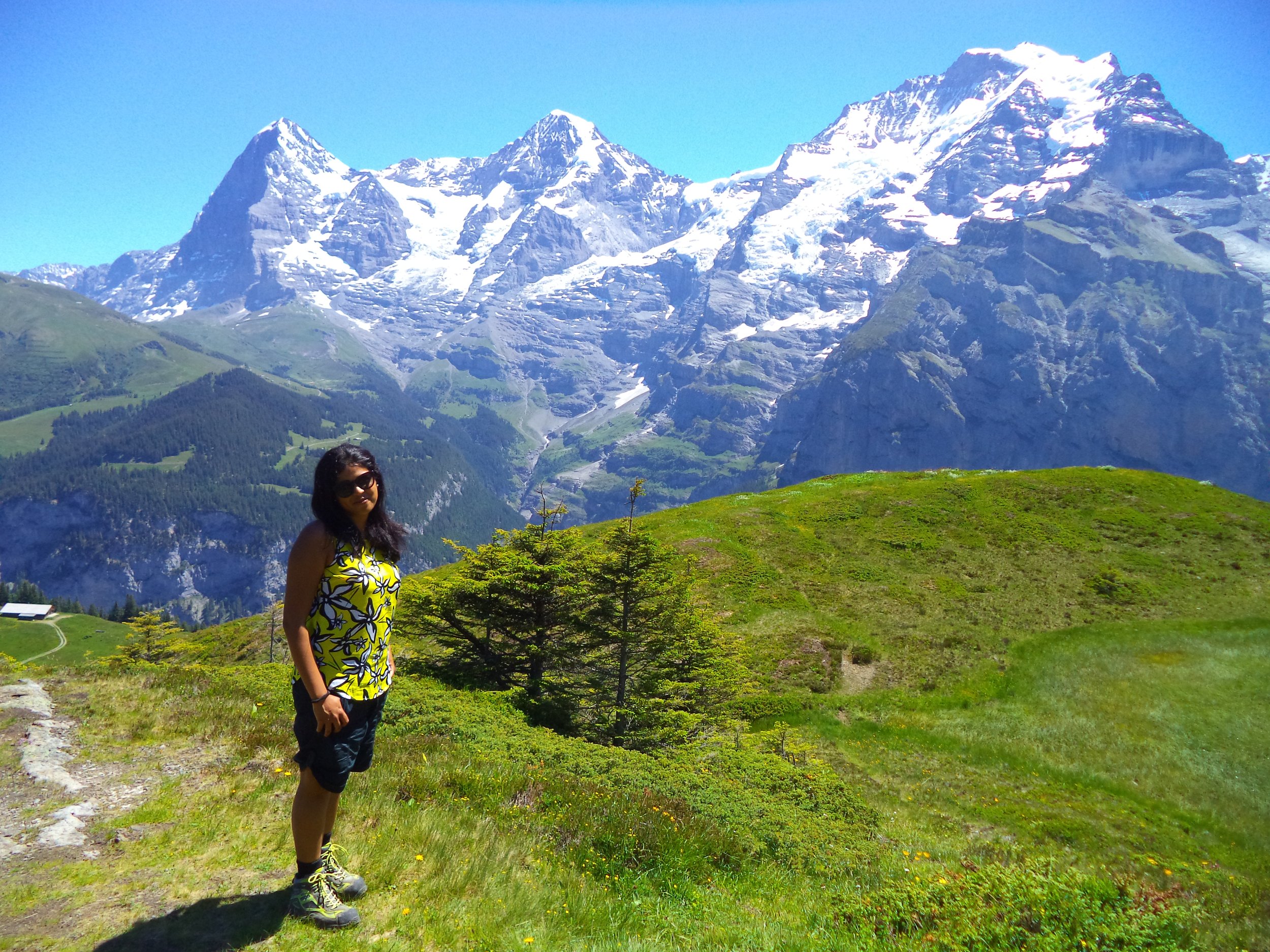
#TBT Summer 2017 when i first visited beautiful switzerland. almost a decade later i find myself moving there with my family.