


Do you have a moment to talk about poetry?
/My YouTube ads have begun to show a disturbing trend recently. Instead of the colic drops and self-rocking cribs of last year, the algorithm has begun to spout 30 second promos from self-help gurus. These influencers have apparently overturned the second law of thermodynamics and from their beachfront properties, explain how I too can redirect my life away from entropy by following their simple plan. Worryingly, I have fallen for it, turning over my precious attention to people who promise to create more time for me, even as they steal it away.
Awful though this sounds, some good has come of it. At their urging (and from the more tried and tested recommendation of friends) I have tried to incorporate more small pleasures into my day. Yes, I now have an illicit pack of chocolate digestives stashed in my drawer at work, but more recently, my pleasure of choice has been, wait for it, poetry.
Bear with me, here.
Poetry has a bad rep, and those who read (or God forbid, write) it, are often looked upon with the same raised eyebrow reserved for naturists. Like nudism, poetry strips literature bare, and the result can be uncomfortable.
But for me, in this current crush of daily life, I’ve found myself turning to the (dis)comfort of poetry. Short snippets of verse, rich with images, are like a tonic in the mundanity of admin and chores. Poetry is a distillate, boiling down the fluff and padding of thought into a few concentrated lines, which you can swig from surreptitiously - a whiskey of words.
Like many people, I struggled to like poetry in school. Unless carefully instructed, I found it hard to analyse a poem and the more abstract forms passed me by entirely. If I am at all stretched, I will default to something easy to read, namely prose. Poetry isn’t normally intuitive for me which is why I am surprised that in these current difficult times, I am turning to it above all other written forms.
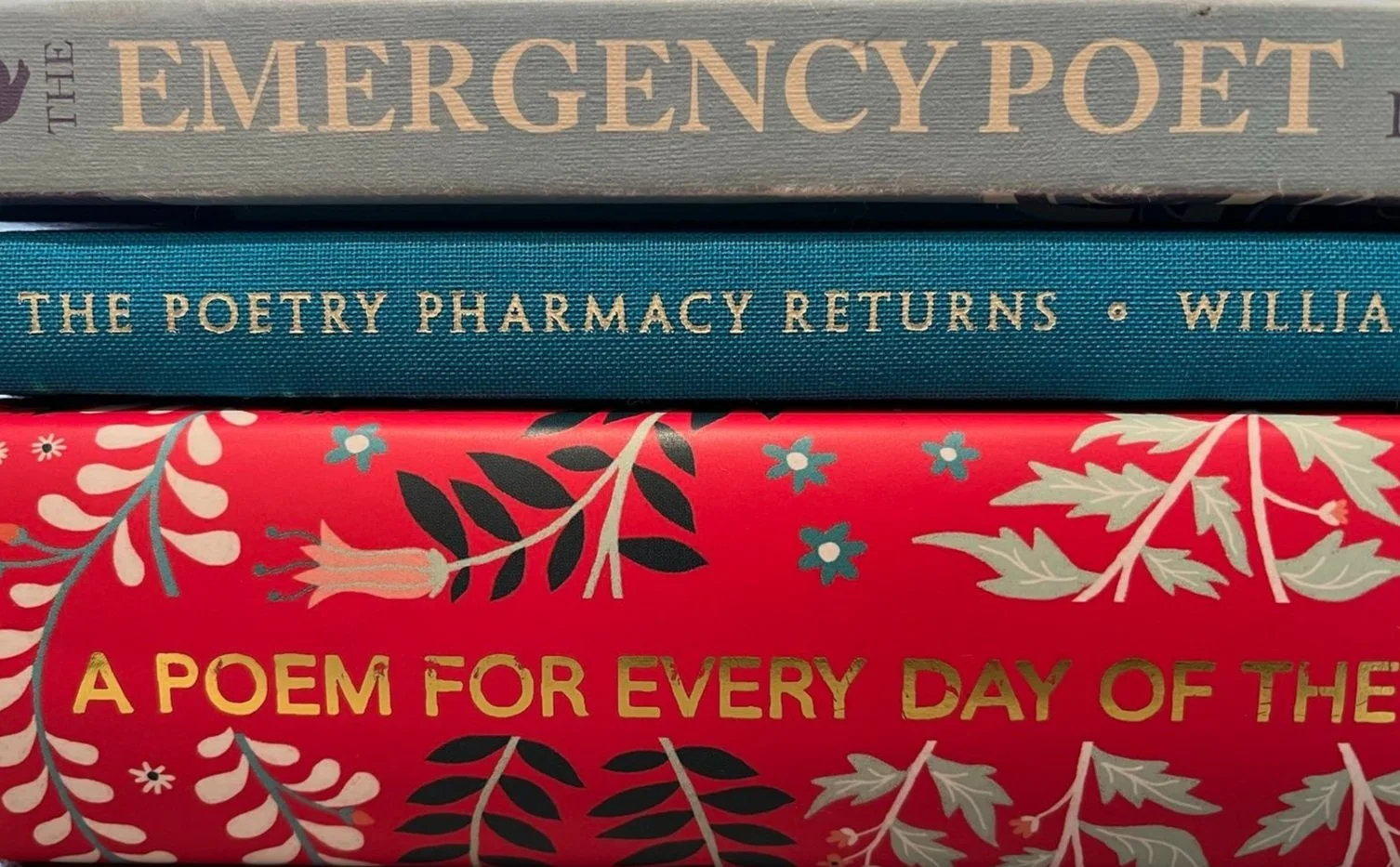
This is where anthologies help. Curated to offer poems that speak to a certain mood or feeling, you can take your pick from a selection complied by those who know. Better still, certain anthologies e.g. the Poetry Pharmacy contain short, relatable interpretations of the poem, which can make the process of reading the poem that much easier.
As a birthday gift to my son, I bought him (read, me) a poetry anthology containing a poem for every day of the year. As we cuddle up at bedtime, I thrill to read which old favourite or new jewel will be today’s poem. He tries to flick through the book, but like it or not, I fix the page down and recite the poem out loud. Sometimes he settles, but more often than not, he continues to fidget until I put him down, his baby attention span no match for ‘The Listeners’ by Walter de la Mare.
But I trust that something transfers in those few minutes of spell-casting as I read the poem. Spoken out loud, poetry takes on added emphasis, the rhythm of the lines or the satisfaction of a rhyme can be as powerful as a chant. After all, what are hymns and prayers but holy poetry? By reading aloud attention is drawn to the page, to breath and to the meaning of the words, something that cannot be as succinctly done by reading prose.
As the days turn warmer I have found a personal poet laureate in Mary Oliver, an American poet, who wrote predominantly about nature. Her life was spent in contemplation in the outdoors and she would start her days with long walks to gain inspiration and peace. I now try and follow her example and set the alarm earlier than the baby, to sit in the garden before the day starts. Sitting in the morning light, I try and recite a poem, muttering words to myself like a prayer. And it works. My pulse slows and my brain quiets, the anxieties of the day stilled for a little while at least.
It may not solve global warming but there is power and possibly even magic in poetry. There is a reason the form has been lauded throughout civilisation from Calliope of Greece, all the way back to the Vedas of India. Throughout the ages, writers and holy men worshipped poetry, so it seems reasonable then that I, mere mortal that I am, would become a convert.